
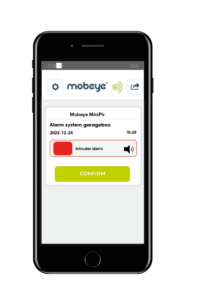

Temperature Monitoring
Monitor temperature changes and receive instant alerts when the threshold is reached. 4G-connected devices for freezers, cold rooms, server rooms and agricultural environments.
Showing all 4 results
-
 Outdoor Enclosure (Add-on)
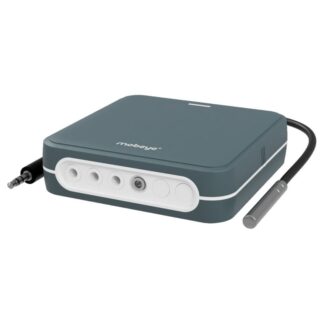
Mobeye ThermoGuard CM4200 – 4G Temperature Detector
Price range: € 249,99 through € 275,00 Choose options This product has multiple variants. The options may be chosen on the product page -
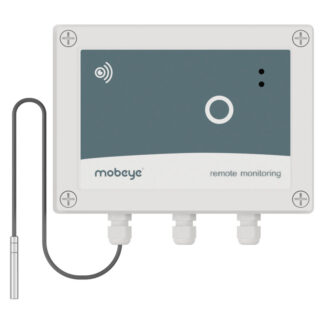
Mobeye Frost Alert CM4200X
€ 310,00 (€ 256,20 excl. VAT) Add to Basket -
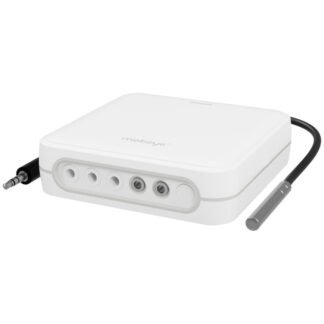
Mobeye ThermoGuard TwinLog CML4255 Temperature Alarm
€ 375,00 (€ 309,92 excl. VAT) Add to Basket -
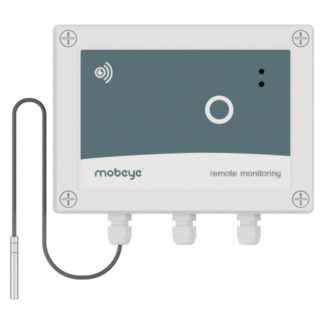
Mobeye ThermoGuard TwinLog CML4275 Temperature Monitor
€ 430,00 (€ 355,37 excl. VAT) Add to Basket
Temperature Monitoring
Monitor temperature remotely and receive an alarm when conditions move beyond configured limits. Mobeye temperature monitoring systems measure temperature, detect high and low temperature conditions and, depending on the model, record temperature data and monitor power failure. They are suitable for refrigerators, freezers, cold rooms, server rooms, agricultural environments, technical installations and other locations where temperature changes can cause damage, product loss or operational problems.
Battery-powered models can monitor locations without a reliable mains supply, while externally powered systems are suitable for permanent installations. Mobeye cellular temperature monitoring systems do not require a local Wi-Fi connection.
Mobeye offers temperature monitoring systems for different requirements, from a straightforward remote temperature alarm to temperature monitoring with historical data logging. The right system depends on the temperature range you need to monitor, the installation conditions, the available power supply and whether you need alarm notifications only or also historical temperature data.
What Is Temperature Monitoring?
Temperature monitoring means measuring the temperature of a specific environment and checking the measurement against defined limits. If the temperature becomes too high or too low, the monitoring system can trigger an alarm. A temperature threshold is the predefined value at which an alarm condition begins. A high temperature threshold defines the upper limit, while a low temperature threshold defines the lower limit.
Remote temperature monitoring allows the temperature to be monitored without someone being physically present at the location. When the measured temperature moves beyond a configured high or low threshold, the system can send an alert to the responsible person so that the cause can be investigated and corrective action can be taken. This is particularly useful where a temperature problem can develop outside normal working hours or in an unattended location.
How Remote Temperature Monitoring Works
A Mobeye temperature monitoring system consists of a monitoring unit and one or more temperature sensors. The temperature sensor provides the temperature measurement to the monitoring unit.
You configure the high and low temperature thresholds according to the requirements of the application. When the measured temperature rises above the high threshold or falls below the low threshold, the system detects the deviation and sends an alarm notification.
Temperature measurements are also recorded and made available through the Mobeye Portal.
The basic process is:
Temperature sensor → measurement → threshold check → alarm detection → remote notification → corrective action.
Temperature Monitoring Applications
Temperature monitoring is used wherever a temperature change can affect products, equipment, buildings or processes. The required system depends on the temperature range, acceptable limits, installation environment and whether historical data is required.
Medical Refrigerators and Freezers
Medical refrigerators and freezers may need to maintain a controlled temperature to protect temperature-sensitive products. Remote monitoring can provide an early warning when the temperature moves outside the required range.
For applications where documented measurement accuracy is required, sensor accuracy, calibration and verification should be considered as part of the monitoring procedure.
See: Medical refrigerator temperature monitoring
Cold Rooms and Cold Storage
A refrigeration failure, power interruption or open door can cause the temperature in a cold room or storage facility to rise. Remote monitoring can detect the deviation and alert responsible staff before the problem develops further.
See: Cold room and cold storage monitoring
Cold Chain
Temperature-sensitive goods can be exposed to unsuitable temperatures during storage and transport. Temperature monitoring can help identify temperature excursions and, where data logging is available, provide a record of temperature conditions.
Server Rooms and Data Centres
Server rooms and technical spaces can become too warm when cooling equipment fails, ventilation is inadequate or power is interrupted.
Temperature monitoring provides an early warning when the room temperature exceeds a configured high temperature threshold, giving IT or facility staff time to investigate and take corrective action.
See: Server room temperature monitoring
Agriculture and Frost Protection
Low temperatures can damage crops, plants, water systems and agricultural installations. A low-temperature or frost alarm can notify the responsible person when the temperature falls below a defined threshold.
See: Mobeye Frost Alert Systems Comparison: CM4200X vs CML4275
Industrial Temperature Monitoring
Industrial installations may require temperature monitoring for equipment, storage areas or processes. Depending on the application, one or more temperature sensors can be used.
For permanent installations, externally powered systems can provide remote monitoring and temperature logging. Models with robust enclosures are available where additional protection against dust and water is required.
What Is a Temperature Excursion?
A temperature excursion occurs when the measured temperature moves outside the acceptable range for the monitored application. In practical terms, the temperature has crossed the configured high or low threshold.
The significance of an excursion depends on the application. A short deviation may have a different impact from a prolonged period outside the required temperature range.
Remote monitoring reduces the time between the start of an excursion and the moment someone becomes aware of it. Where temperature logging is available, historical measurements can help determine when the deviation started, how long it lasted and whether the temperature returned to normal.
What Causes Temperature Excursions?
Common causes include refrigeration or cooling equipment failure, power failure, an open refrigerator or freezer door, poor ventilation, a failed heating system, a faulty thermostat, extreme outdoor temperatures and incorrect sensor placement.
Temperature monitoring does not prevent the underlying fault, but it can detect the resulting temperature change and provide an early warning.
High and Low Temperature Thresholds
Temperature monitoring systems can be configured with both high and low temperature thresholds.
A high temperature threshold defines the upper temperature value at which a high temperature alarm can be triggered. A low temperature threshold defines the lower value at which a low temperature alarm can be triggered.
The correct thresholds depend on the application. They should be based on the requirements of the equipment, products or process being monitored rather than on a generic setting.
Temperature Monitoring With Data Logging
A temperature alarm notifies you when a configured threshold is crossed. A temperature data logger also records measurements over time. Historical temperature data can help you identify gradual changes, investigate temperature excursions, recognise recurring problems, review temperature trends and determine how long a deviation lasted.
The Mobeye ThermoGuard TwinLog CML4255 and CML4275 combine temperature monitoring with temperature data logging and remote access to historical measurements.
Temperature Monitoring and Power Failure
Temperature problems are sometimes the result of a separate power failure. For example, a refrigerator may stop cooling because its power supply has been interrupted. The temperature may only begin to rise after the power failure has already occurred.
When a compatible externally powered Mobeye monitoring system detects a power failure, it can send a separate power failure notification. This can provide an earlier indication of a problem and help distinguish a power interruption from a temperature-related fault.
Cellular Temperature Monitoring Without Wi-Fi
Mobeye cellular temperature monitoring systems communicate over the mobile network, so they do not require a local Wi-Fi connection. This is useful for remote buildings, agricultural sites, storage facilities, technical rooms and other locations where installing or maintaining local internet access is impractical.
Battery-powered models provide additional flexibility where mains power is unavailable. Externally powered models are suitable for permanent installations and can support additional monitoring functions depending on the model.
See: Wireless temperature monitoring
Alarm Notification and Response
The value of temperature monitoring depends on detecting a temperature problem and communicating it to someone who can respond.
When the measured temperature moves beyond a configured high or low threshold, the system can send an alarm notification according to its configuration. Depending on the model and settings, notifications can be delivered through the Mobeye app, telephone call, SMS and/or email.
Alarm settings should be selected according to the application, the acceptable temperature range and the time available to investigate and correct a problem.
Temperature Sensor Accuracy, Calibration and Placement
The measured temperature is only useful if the sensor is suitable for the application and installed correctly.
For applications where documented measurement accuracy is required, sensor accuracy, calibration and verification should be considered as part of the monitoring procedure. Mobeye uses fully tested and calibrated digital temperature sensors.
Sensor placement also affects the measurement. A sensor positioned close to a cooling element, heating source, direct sunlight or strong airflow may not represent the temperature of the monitored environment.
In refrigerators and freezers, position the sensor so that it provides a meaningful measurement of the monitored space and the conditions relevant to the stored products. In larger rooms or installations with different temperature zones, multiple sensors can provide a more representative picture than a single measurement point.
How to Choose a Temperature Monitoring System
The right temperature monitoring system depends on several practical requirements.
- Alarm only or data logging?
Choose a straightforward temperature alarm when you primarily need notification when the temperature crosses a configured threshold.
Choose a system with data logging when you also need to review measurements over time, investigate excursions or analyse temperature trends. - Battery or external power?
Battery-powered monitoring is useful for remote locations or installations where connecting mains power is impractical.
Externally powered systems are suitable for permanent installations and can support additional functions such as power failure detection. - One or multiple temperature sensors?
If temperature needs to be measured at different locations, choose a system that supports the required number of sensors.
The CML4255 and CML4275 support two temperature sensor inputs, while the CM4200 is designed for one temperature sensor. - What installation environment?
For installations exposed to dust or water, consider the enclosure rating of the monitoring unit.
The CML4275 has an IP66-rated industrial enclosure and is suitable where additional protection against dust and water is required. - Do you need additional monitoring?
Some applications require more than temperature measurement. Depending on the installation, you may also need to monitor power supply, battery voltage, water level or other technical parameters.
In such cases, a monitoring system with additional inputs may be more appropriate than a dedicated temperature monitor.
Which Mobeye Temperature Monitor Do You Need?
Mobeye offers three core temperature monitoring systems, each designed for a different requirement.
ThermoGuard CM4200
The CM4200 is suitable when you need a straightforward remote temperature alarm. It monitors temperature against configured limits and sends alarm notifications when the temperature moves outside the permitted range. Choose the CM4200 when temperature alarm functionality is the main requirement and historical temperature logging is not needed. For dedicated frost monitoring, the Mobeye Frost Alert CM4200X is a separate option designed specifically for high and low temperature alarm applications.
ThermoGuard TwinLog CML4255
The CML4255 combines temperature monitoring with historical data logging and supports two temperature sensor inputs. Choose the CML4255 when you need temperature alarms as well as a record of temperature conditions over time.
Read also: Legionella Prevention Through Remote Water Temperature Monitoring
ThermoGuard TwinLog CML4275
The CML4275 combines temperature monitoring and data logging with an IP66-rated industrial enclosure and two temperature sensor inputs. Choose the CML4275 when temperature logging is required in an installation where additional protection against dust and water is needed.
Frequently Asked Questions About Temperature Monitoring
What Is a Temperature Monitoring System?
Can I Monitor Temperature Without Wi-Fi?
Can a Temperature Monitor Work Without Mains Power?
What Is the Difference Between a Temperature Alarm and a Data Logger?
Can I Monitor a Refrigerator Remotely?
Can I Monitor a Server Room Temperature?
What Causes a Temperature Excursion?
How Do I Choose a Temperature Monitoring System?
Related Temperature Monitoring Applications
Explore the specialist Mobeye solutions for specific temperature monitoring requirements:
- Medical refrigerator temperature monitoring
- Cold chain monitoring
- Legionella prevention
- Server room temperature monitoring
- Temperature monitoring for agriculture
- Wireless temperature monitoring
Mobeye Temperature Monitoring
Mobeye develops cellular monitoring and security systems with a focus on compact design and low power consumption. Its temperature monitoring range covers straightforward temperature alarms as well as systems with historical temperature logging. The systems are designed for applications where temperature needs to be monitored remotely, including locations where a fixed internet connection or permanent on-site supervision is not practical. Choose the system according to your required temperature range and thresholds, power supply, sensor requirements, installation environment and need for historical data.
Showing all 4 results