

Alarm Communicators (I/O)

Wireless alarm communicators transmit alarm events instantly to mobile phones or control centres. 4G-connected and plug-and-play.
Showing all 4 results
-

 Outdoor Enclosure (Add-on)
Mobeye CM-Guard-40 CM4040 – Alarm Detector with 4 potential-free inputs
€ 278,30 (€ 230,00 excl. VAT) Add to Basket -
 Outdoor Enclosure (Add-on)
Mobeye CM-Guard-42 CM4042 – 4 Inputs, 2 Relay Outputs
€ 375,10 (€ 310,00 excl. VAT) Add to Basket -
 Outdoor Enclosure (Add-on)
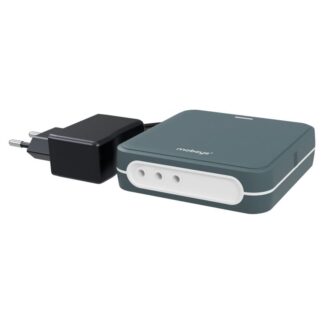
Mobeye PowerGuard CM4100 – 4G Power Failure Alarm
Price range: € 215,00 through € 220,00 Choose options This product has multiple variants. The options may be chosen on the product page -
 Outdoor Enclosure (Add-on)
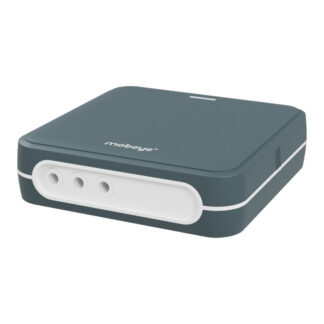
Universal 4G Alarm Communicator | Mobeye CM-Guard CM4000
€ 199,99 (€ 165,28 excl. VAT) Add to Basket
4G Alarm Communicators for Remote Alarm Monitoring
Alarm communicators form the backbone of any remote monitoring system. They ensure that alarms, malfunctions and sensor signals are reported immediately, without the need for on-site checks. By transmitting alerts in real time, alarm communicators help prevent damage, reduce downtime and significantly lower operational costs.
How 4G Alarm Communicators Work
A 4G alarm communicator monitors connected sensors continuously. When a predefined condition is met (an intrusion, power failure, equipment fault or environmental change), an alert is transmitted instantly via the 4G cellular network to designated contacts or a monitoring centre.
Unlike traditional solutions, modern alarm communicators deliver alerts through multiple channels simultaneously, including app push notifications, SMS, email and voice calls. This multi-channel approach ensures critical messages are received and acknowledged, even if one channel is temporarily unavailable.
Autonomous Remote Alarm Monitoring – No On-Site Infrastructure Needed
4G alarm communicators are built for fully autonomous operation. Integrated cellular modules mean alerts are sent without a fixed internet connection or local control panel, making them ideal for remote locations, temporary sites and unmanned installations.
Key operational features include:
- Battery-powered operation for continuous monitoring where mains power is unavailable
- Energy-efficient design for extended battery life in permanent and temporary deployments
- Optional external power connection where available
- Output relays for remote device control, system resets or process automation
4G Cellular Alarm Communicators for Professional Signalling
A 4G cellular alarm communicator provides a secure and reliable signalling path for alarm inputs. These modules are used to report activated sensors, monitor power availability and forward status messages to designated contacts or monitoring centres.
Multiple input channels allow connection of different sensors, while relay outputs enable remote switching or automation tasks. Because communication takes place over modern mobile networks, alerts are delivered quickly and consistently, even in critical situations.
A Modern Auto Dialler Replacement
Traditional GSM auto diallers are limited to making phone calls when an input is triggered. While simple, they lack the resilience, flexibility and reliability required for professional monitoring.
A modern 4G alarm communicator provides a far more robust solution. Instead of relying on a single call path, it delivers digital alerts through multiple channels, including app notifications, SMS, email and voice calls. This ensures messages are received and acknowledged, even if one channel is unavailable.
As security standards and insurers increasingly move away from basic auto diallers, alarm communicators have become the preferred choice for reliable alarm signalling. They offer the same ease of installation but with improved accuracy, faster response times and stronger continuity of service.
Secure, Reliable Connectivity for Critical Alarm Signalling
A dependable signalling path is the foundation of effective alarm monitoring. 4G alarm communicators maintain a constant link between your sensors and the people responsible for acting on alerts; whether for security, technical monitoring or operational processes.
With support for multiple input channels, relay outputs and multi-channel alert delivery, these devices are a foundational component for any remote monitoring solution where reliability, autonomy and immediate reporting are non-negotiable.
For security installers looking to connect an existing alarm panel to a professional Alarm Receiving Centre (ARC) via IP – particularly those preparing for the analogue switch-off – see our guide: Connecting Your Alarm System to an ARC via IP.
Who Uses 4G Alarm Communicators?
Our alarm communicators are used across a wide range of applications:
- Security installers – standalone intruder detection, site monitoring and alarm signalling to ARCs
- Facility managers – technical monitoring of plant rooms, utilities and building infrastructure
- Industrial buyers – equipment fault reporting, process alerts and remote SCADA integration
- Home and small business owners – reliable alarm reporting without a full panel or broadband connection
Showing all 4 results