
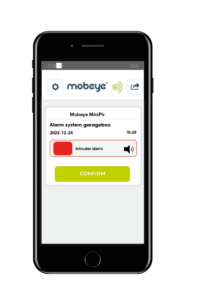
Telemetry Monitoring

Showing all 3 results
-
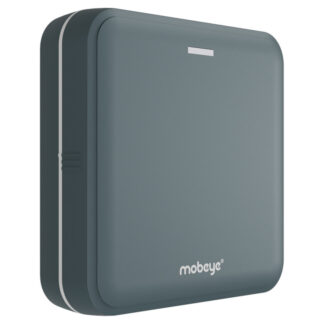

Mobeye CM-Guard TwinLog CML4055 – Voltage Monitor & Alarm
€ 289,19 (€ 239,00 excl. VAT) Add to Basket -
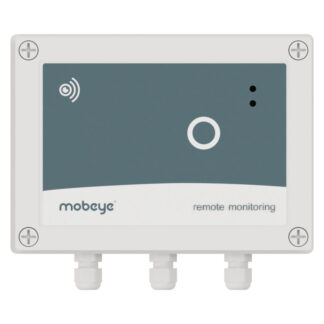
Mobeye SISTM CML4015-HP – Externally Powered
€ 482,79 (€ 399,00 excl. VAT) Add to Basket -
Mobeye SISTM CML4015-LP – Battery Powered
€ 603,79 (€ 499,00 excl. VAT) Add to Basket
Remote Telemetry Monitoring for Technical and Industrial Applications
As industrial automation continues to advance, telemetry systems have become essential tools for efficient and reliable operations. Mobeye provides a range of high-quality industrial sensors and transmission modules, precisely engineered to perform in even the most demanding infrastructure environments.
Our telemetry monitoring systems are designed to deliver exceptional accuracy in capturing voltage readings, tracking alarm thresholds, detecting irregularities, and presenting a clear overview of value trends.
Mobeye Telemetry Modules
To find the most suitable solution for your specific application, explore the following product options:
- For accurate analogue measurement of battery voltage, the CM-Guard TwinLog CML4055 is the perfect solution.
- If your application involves sensors that produce an output voltage between 0–10V or 4–20mA, the SISTM CML4015-HP and SISTM CML4015-LP are the ideal choices.
For more information on how Mobeye can meet your specific needs, please contact us — our team will be happy to provide expert guidance and tailored solutions.
Frequent Asked Questions on Telemetry Monitoring
Q: What is telemetry monitoring?
A: Telemetry monitoring, often known as “telemetry,” is a system that remotely collects and transmits data from various devices, sensors, or instruments to a central location for analysis and action. It’s used in fields like healthcare, aviation, and industry.
Q: Where is telemetry monitoring commonly used?
A: Telemetry monitoring is employed in diverse fields, including healthcare (patient vital signs), aviation (flight data), automotive (vehicle performance), industry (machinery status), and environmental monitoring (weather conditions).
Q: What are the benefits of telemetry monitoring?
A: The key advantages of telemetry monitoring include real-time data access, remote monitoring and control, early issue detection, and enhanced safety and efficiency in various industries.
Q: How does telemetry monitoring work?
A: Telemetry monitoring systems use wireless or wired networks to transmit data from sensors or devices to a central hub. The data is then processed and analysed for monitoring, diagnostics, or decision-making.
Q: What role does telemetry play in environmental monitoring?
A: Telemetry is used in environmental monitoring to collect data from remote sensors, monitoring weather conditions, water quality, pollution levels, and more, aiding in environmental management.
Q: Can telemetry help prevent equipment failures in industries?
A: Yes, telemetry can help prevent equipment failures by monitoring machinery performance and alerting operators to any anomalies. This allows for timely maintenance and reduces downtime.
Q: What are the advantages of real-time data access through telemetry?
A: Real-time data access via telemetry allows for immediate response to changing conditions, proactive maintenance, data-driven decision-making, and improved operational efficiency in various industries.
Showing all 3 results