
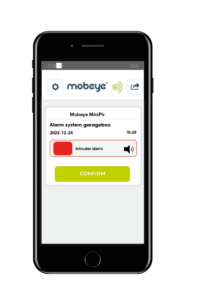


Industrial monitoring devices provide continuous measurement of analogue sensors. Monitor pressure, flow, temperature and vibration with 4G connectivity, data logging and instant alerts.
-
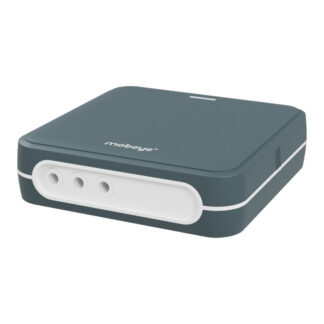
 Outdoor Enclosure (Add-on)
Universal 4G Alarm Communicator | Mobeye CM-Guard CM4000
€ 199,99 (€ 165,28 excl. VAT) Add to Basket -
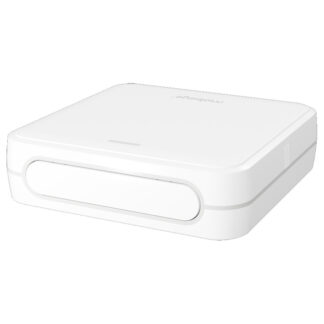
Mobeye Panic Button CM4500 – 4G Fixed Panic Alarm
€ 215,00 (€ 177,69 excl. VAT) Add to Basket -
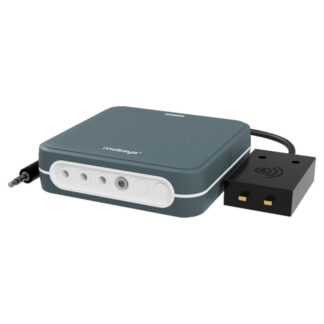 Outdoor Enclosure (Add-on)
Mobeye WaterGuard CM4300 Water Leak Detector & Alarm
€ 245,00 (€ 202,48 excl. VAT) Add to Basket -
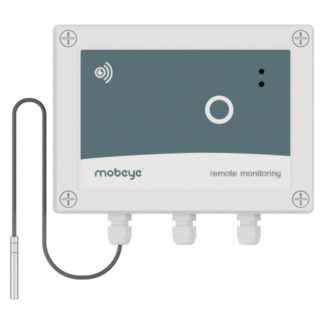
Mobeye ThermoGuard TwinLog CML4275 Temperature Monitor
€ 430,00 (€ 355,37 excl. VAT) Add to Basket -
 Outdoor Enclosure (Add-on)
Mobeye Call-Key MCK400 – Smartphone Access Control System
€ 375,10 (€ 310,00 excl. VAT) Add to Basket -
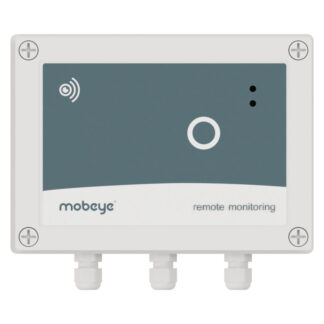
Mobeye SISTM CML4015-HP – Externally Powered
€ 482,79 (€ 399,00 excl. VAT) Add to Basket -
Mobeye SISTM CML4015-LP – Battery Powered
€ 603,79 (€ 499,00 excl. VAT) Add to Basket -
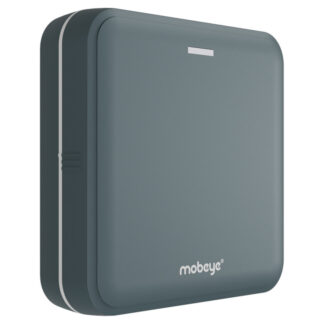
Mobeye CM-Guard TwinLog CML4055 – Voltage Alarm
€ 289,19 (€ 239,00 excl. VAT) Add to Basket
How Industrial monitoring works
Mobeye’s industrial monitoring devices measure analogue sensor values – pressure, flow, temperature, vibration – and send an immediate alarm the moment a threshold is breached. Each device communicates directly over 4G, without a local gateway to fail. Devices run on battery or external power depending on the site, making them a practical fit for continuous measurement in established facilities, temporary or remote deployments, and unmanned installations alike. Configure min/max thresholds per sensor, log all readings to the Mobeye Portal, and forward alarms directly to designated staff or monitoring centres.
Industrial monitoring is essential for maintaining safety, efficiency, and reliability across factories, warehouses, production plants, and other technical environments. From industrial temperature monitoring of sensitive storage areas to full machinery condition monitoring on the production floor, continuous monitoring of equipment performance, environmental conditions, and signalling points helps businesses prevent costly downtime, improve maintenance planning, and protect both personnel and assets in real time.
Key benefits
- Reliable alerts: Immediate notification and alarm forwarding when values exceed configured limits
- Wireless connectivity: Uses mobile networks, avoiding reliance on local power or networks
- Data logging: Detailed records of measured values available through the Mobeye Portal and app, aiding audits and analysis
- Scalable deployment: Suitable for single machines through to complex multi‑sensor installations
- Enhanced uptime: Early warning reduces unplanned downtime and maintenance costs
SMS alerts and notifications for factories
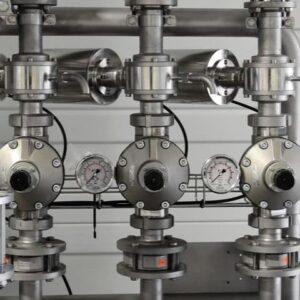
Mobeye industrial monitoring devices connect directly to analogue sensors and measure output values continuously. Each device is configured with minimum and maximum thresholds per input channel. When a measured value falls outside the defined range, the device triggers an alarm immediately, forwarding notifications via SMS, push alert, or call to designated contacts or a monitoring centre.
All measured values are logged and accessible through the Mobeye Portal and mobile app, providing a full audit trail of sensor readings and alarm events. Devices communicate over mobile networks (4G), so no local network infrastructure or cabling is required. Power options include external supply or battery, depending on the installation.
Our monitoring systems support alarm forwarding, ensuring that critical alerts are transmitted immediately to designated personnel or monitoring centres. This enables a rapid response to urgent situations, reduces downtime, and helps prevent accidents. The monitoring devices can read analogue sensor values and transmit them remotely. They are suitable for a wide range of industrial environments and can operate independently of local power supplies and network infrastructure.
Applications
Mobeye industrial monitoring devices are used across a wide range of sectors and process types:
- Machine condition monitoring – track sensor output values that indicate wear, overload, or fault conditions in rotating or static equipment.
- Pipeline and tank monitoring – measure pressure, flow rate, or fluid level continuously, with alarms on deviation from setpoints.
- Utility monitoring – log energy consumption, water flow, or compressor output; detect anomalies before they affect operations.
- Environmental measurement – monitor temperature, humidity, or air quality within production or storage facilities.
- Remote and unmanned sites – deploy without permanent infrastructure; receive alarms and access logged data remotely via the portal.
- Access control – monitor entry points or restricted zones and receive alerts on unauthorised access events.
For power failure monitoring, temperature monitoring, and access control on industrial sites, Mobeye offers dedicated solutions for each. For general site protection, see our SME security systems.
Need help choosing the right device?
Not sure which device fits your application? Contact our team for advice on sensor compatibility, threshold configuration, and the right model for your site.
Frequent Asked Questions
Industrial monitoring refers to the continuous measurement and analysis of key parameters across industrial installations. These parameters can include analogue sensor values for pressure, flow, humidity, vibration, or other process-related readings. By tracking these values and comparing them with predefined limits, businesses can identify anomalies, trigger alerts, and respond before issues escalate.
Mobeye devices read analogue sensor signals (typically 4–20 mA or 0–10 V) and support any sensor that outputs within these ranges, including pressure transducers, flow meters, temperature transmitters, vibration sensors, and humidity sensors.
The device reads the connected sensor at a configurable interval, logs the value, and transmits data over the mobile network. If a value exceeds a configured threshold, an alarm is sent immediately, independently of any local network or power infrastructure.
Threshold-based alarms allow maintenance teams to intervene before a fault becomes a failure. Logged data supports root cause analysis, compliance reporting, and planned maintenance scheduling.
Yes. Because Mobeye devices operate on battery power and use mobile networks, they can be installed quickly at sites with no fixed power supply or network connection, including temporary deployments, construction sites, and unmanned substations.