


Why North American Connectivity Requires a Different Mobeye Version
Reliable mobile communication is a core requirement for remote monitoring and alarm systems. Mobeye devices are engineered to operate across international markets using robust cellular technology, ensuring consistent performance in a wide range of environments.
However, mobile networks are not globally uniform. Differences in frequency bands, certification requirements, and operator standards mean that a device compatible in one region may not function correctly in another.
Standard Mobeye Communication Configuration
As standard, Mobeye devices are equipped with a 4G CAT-1 communication module with 2G fallback. This configuration is designed to maximise global usability and ensure stable connectivity in most countries.
The combination of LTE CAT-1 and fallback capability provides resilience in environments where 4G coverage varies, making it suitable for the majority of European, Asian, and international deployments.
Why the United States and Canada Are Different
The United States and Canada operate mobile networks using distinct frequency allocations and regulatory frameworks compared with most other regions. These differences directly affect device compatibility.
As a result, standard Mobeye CAT-1 modules are not compatible with North American networks. Devices configured for other global regions may fail to connect or operate inconsistently when deployed in the US or Canada.
Dedicated US and Canada Compatible Versions
To address this, Mobeye offers specific hardware variants designed for North American deployment. These versions use CAT-1 WW (worldwide) communication modules configured for reliable operation on US and Canadian LTE networks.
This ensures stable connectivity and compliance with regional network requirements, making them suitable for professional installations in North America.
Ordering the Correct Version
Selecting the correct hardware version is essential for successful deployment. For projects in the United States and Canada, customers must choose the dedicated variant at the time of purchase.
On MobeyeStore, this is done by selecting the ‘US/Canada version’ checkbox. These models are available at an additional cost due to their specialised communication hardware.
Power Supply Compatibility
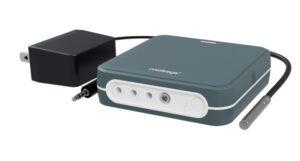
Mobeye devices for the US and Canada are supplied with a mains adapter fitted with a Type A plug, which is the standard two-pin plug used in the United States and Canada. Mains adapters with a Type A plug are also available separately.
Ensuring Reliable Global Deployment
By offering both standard international devices and North American-specific variants, Mobeye ensures consistent performance across all supported markets. This approach allows installers and system integrators to deploy solutions globally without compromising on connectivity reliability or network compatibility.
Frequently Asked Questions on Mobeye US/Canada Connectivity
Mobile networks in the United States and Canada use different LTE frequency bands and certification standards than many European and international networks. Standard Mobeye versions are therefore not compatible with North American operators. For reliable operation in these countries, dedicated US/Canada models with CAT-1 WW communication modules are required.
With the correct US/Canada version, Mobeye devices can be used for a wide range of professional monitoring applications, including alarm communication, temperature monitoring, power failure detection, and water leak alerts. These applications rely on stable mobile connectivity, which is ensured by the CAT-1 WW module designed for North American LTE networks.
The main difference is the communication module inside the device. Standard Mobeye models use a 4G CAT-1 module with 2G fallback suitable for most international markets, while the US/Canada version contains a CAT-1 WW module configured specifically for North American LTE networks.
When purchasing through MobeyeStore, the US/Canada version can be selected directly on the product page. Customers must tick the ‘US/Canada version’ checkbox during ordering to receive a device equipped with the correct communication module for North American LTE networks.
CAT-1 WW refers to a worldwide LTE Cat-1 communication module that is specifically configured for compatibility with North American mobile networks. In Mobeye devices, this version is used for the US and Canada market to ensure stable LTE connectivity where standard international modules do not connect reliably.
No, standard Mobeye devices with a 4G CAT-1 module and 2G fallback are not compatible with mobile networks in the United States. Although these devices operate reliably in most international markets, North American LTE networks require a dedicated hardware configuration. For use in the US, a Mobeye device with a CAT-1 WW module is required.
No, 2G fallback does not solve compatibility issues in the United States or Canada. In many regions of North America, 2G networks are no longer available or are heavily restricted. Therefore, a standard Mobeye device relying on 2G fallback cannot be used as an alternative. A US/Canada-specific CAT-1 WW version is required.
Existing Mobeye devices with a standard communication module cannot be upgraded to a US/Canada-compatible version. The difference lies in the hardware module itself. To ensure reliable operation in North America, a device must be ordered with the dedicated CAT-1 WW module from the start.
Any questions left?
Contact Mobeye for more information.