

Water temperature is one of the clearest indicators of Legionella risk. A hot-water or cold-water system can move outside its defined control range without anyone noticing. A temperature deviation can signal that something needs attention long before the next routine inspection.
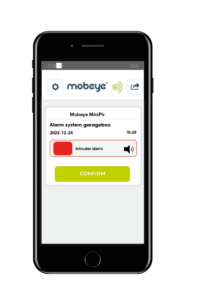
Mobeye offers remote temperature monitoring for water systems. Configurable alarms alert the responsible person when the temperature crosses a set limit. Selected models also record historical temperature data in the Mobeye Portal. This provides continuous monitoring between scheduled checks.
What Is Legionella?
Legionella is a bacterium found naturally in freshwater environments. Under the right conditions, it can also grow in engineered water systems. People can develop Legionnaires’ disease and other forms of legionellosis after exposure to contaminated water or water droplets. This makes Legionella risk assessment and control an important part of responsible water management.
Prevention focuses on controlling the conditions that allow the bacteria to grow and spread. Temperature is one of the most practical parameters to control. It is also one of the easiest to monitor continuously.
Why Water Temperature Monitoring Matters
Legionella multiplies when water remains within a temperature range that favours bacterial growth. In a hot-water system, a sudden temperature drop can indicate a problem with heating or circulation. In a cold-water system, an unexpected rise can indicate unwanted warming. Nearby pipework or a change in water usage can cause this.
A manual temperature check shows the condition at one particular moment. A heating fault, circulation problem or equipment failure can occur between inspections. Changes to the installation can also affect water temperature. Remote water temperature monitoring closes this gap. It flags temperature deviations as they occur, rather than weeks later at the next scheduled visit.
There is no single temperature limit that applies to every situation. The appropriate thresholds depend on the water system, the monitoring point and the wider water management programme.
How Remote Temperature Monitoring Works
Temperature at one point in a system rarely tells the whole story. The site’s Legionella risk assessment should therefore determine the monitoring points. Depending on the installation, these may include hot-water storage, circulation loops, specific points of use or sections of a cold-water system where warming presents a known concern.
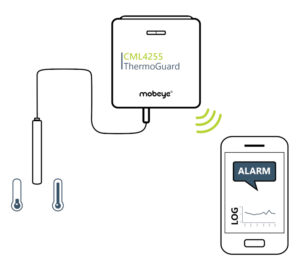
Place the Mobeye temperature sensor at the selected monitoring point and connect it to the appropriate monitoring device. Set high and low temperature limits to match the installation. When the temperature crosses a limit, Mobeye sends an alarm. The system can send alarms outside working hours and between scheduled visits.
The Mobeye Portal and Mobeye Messages App deliver notifications to the responsible person. This gives them time to investigate the deviation and follow the site’s corrective procedure.
Plant rooms and technical areas do not always have a reliable local Wi-Fi connection. Mobeye devices use the mobile network instead. This allows a hot-water or cold-water temperature alarm to reach the responsible person from a basement, rooftop plant room or remote building.
Temperature Logging and Historical Data
An alarm tells you when a temperature exceeds a configured limit. A temperature log shows how a system behaves over time. This can be just as valuable. Recurring dips, gradual drifts and seasonal patterns are easier to identify in a continuous history than from a handful of manual readings.
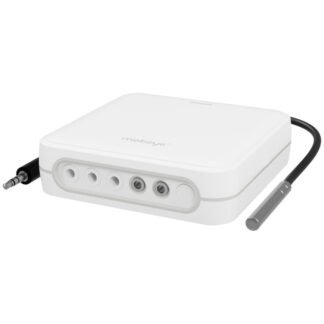
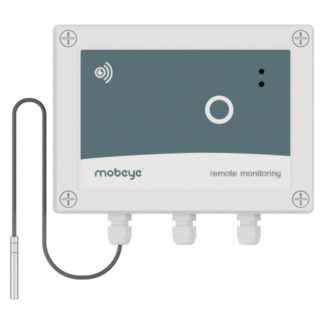
The Mobeye CML4255 and CML4275 combine remote temperature monitoring with data logging in the Mobeye Portal. They are well suited to installations where both real-time alarms and a documented temperature record are required, for example for audits, compliance reviews or ongoing monitoring.
Where It Is Used

Remote water temperature monitoring can support Legionella prevention wherever temperature control forms part of a formal water management programme. Applications include hotels, care homes, healthcare facilities, public buildings and commercial properties.
The system can help landlords and facilities managers maintain a reliable temperature record between scheduled checks.
Every site is different. The responsible water management professional should determine which points to monitor and which limits to apply. They should also define the action required when a temperature deviation occurs.
One Part of a Complete Programme
Temperature monitoring is one important part of a broader Legionella prevention strategy. Depending on the installation and applicable requirements, a complete programme may also include risk assessment, system maintenance, control of water stagnation, cleaning and disinfection, flushing and microbiological testing.
Mobeye does not detect Legionella bacteria. It is not a substitute for these other measures. Mobeye provides remote water temperature monitoring and alarming. This helps identify temperature deviations that may require attention at an early stage.
Mobeye Temperature Monitoring Products
Mobeye offers temperature monitoring solutions for installations where water temperature needs to be monitored remotely.
The CML4255 and CML4275 combine temperature monitoring with data logging through the Mobeye Portal. They are suitable when the installation requires both temperature alarms and a historical record of measurements.
Other Mobeye temperature monitoring products can be used where remote temperature alarms are required without the same logging requirements.
Frequently Asked Questions
No. Mobeye devices monitor physical conditions such as temperature; they do not detect or analyse Legionella bacteria directly. Temperature monitoring is best used as part of a wider Legionella prevention or water management programme.
No. Mobeye systems send alarms and data over the mobile network, so a local Wi-Fi connection is not required. This makes remote monitoring possible even in plant rooms and buildings with poor connectivity.
Yes. High and low temperature limits can be configured for the monitored installation. When a configured limit is exceeded, the system can send an alarm notification.
Yes. The Mobeye CML4255 and CML4275 support temperature logging through the Mobeye Portal, so temperature history can be reviewed whenever it is needed.
That depends on the type of water system, the chosen monitoring point, and your applicable water management requirements. Mobeye devices allow high and low limits to be configured to match your specific installation.