
Securing and monitoring remote locations is a persistent challenge when there is no access to WiFi, landlines, or fixed internet infrastructure. Farms, holiday homes, construction sites, and water facilities are often left unattended, creating exposure to risks such as power failure, temperature fluctuations, and water damage. When these issues go undetected, the consequences can escalate quickly, resulting in costly repairs or operational disruption.
Cellular monitoring systems provide a direct solution. By operating entirely over mobile networks, they eliminate the need for local internet or wired connections. This makes them particularly suitable for isolated environments where traditional systems are unreliable or impossible to install.
Why Traditional Monitoring Systems Fall Short
Most conventional monitoring systems rely on local infrastructure such as broadband connections or wired networks. While effective in urban or fully equipped environments, these systems become unreliable or unusable in remote locations.
Common limitations include:
- dependence on internet connectivity
- vulnerability during power outages
- complex installation requirements
When any of these elements fail, monitoring stops entirely, leaving assets unprotected.
Monitoring Without WiFi: What Are the Options?
There are several approaches to monitoring remote locations, each with its own advantages and constraints.
Wired systems offer stability but require physical infrastructure, making them impractical in isolated areas. WiFi-based solutions depend on local networks, which may be unavailable or unstable. Satellite systems provide coverage in extreme locations but are often costly and complex to implement.
Cellular-based monitoring has emerged as a practical alternative. By using mobile networks, these systems operate independently of local internet connections and can function in a wide range of environments where other solutions are not viable.
How Cellular Monitoring Works
Mobeye‘s monitoring systems use 4G to transmit data and alerts directly to users. This eliminates the need for routers or fixed connections, allowing devices to operate autonomously.
Because they rely on mobile coverage rather than local infrastructure, these systems can be deployed quickly and remain operational even when other networks fail. This makes them particularly suitable for unattended or hard-to-reach locations.
Managing Critical Risks in Remote Environments
One of the main challenges in remote monitoring is the inability to respond quickly to unexpected events. Without real-time visibility, issues such as power failure, water leaks, or temperature drops can cause significant damage before they are detected.
Effective monitoring systems address this by continuously tracking key conditions and sending immediate alerts when thresholds are exceeded. This enables timely intervention and reduces the risk of costly consequences.
Applications Across Different Sectors
Let’s take a closer look at how cellular-based monitoring systems meet the unique security and operational needs of different sectors, from agriculture and healthcare to commercial sites and remote properties.
1. Farming and Agriculture
In agriculture, where remote fields and valuable equipment are often spread across large areas, cellular monitoring systems play a crucial role in maintaining oversight. They provide real-time tracking of key conditions, such as power status and temperature levels, helping farmers ensure that essential systems remain functional. When temperatures drop or water levels rise, these systems send instant alerts, giving farmers time to act before damage occurs. For example, the Mobeye Frost Alert notifies users immediately when temperatures fall too low, helping to prevent frost damage and protect crops, livestock, and equipment.
2. Medical and Pharmaceutical Facilities
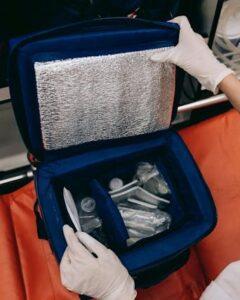
In healthcare, cellular monitoring is essential for protecting the quality and safety of medical and pharmaceutical products. Many medications and vaccines must be stored within strict temperature limits, and even slight deviations can compromise their effectiveness. Cellular systems continuously track these conditions and send instant alerts if temperatures move outside the safe range. This rapid response helps maintain compliance and safeguards public health.
Mobeye’s ThermoGuard CM4200, for example, provides temperature alarms and power failure notifications via phone calls, emails, and SMS messages. For more advanced needs, the ThermoGuard CML4255 and CML4275 models support two sensors and allow users to log and access medicinal storage data online, ensuring complete visibility and control over critical storage environments.
3. Commercial Applications
In the commercial sector, especially in remote offices or facilities, cellular monitoring systems provide a robust security net. They continuously track power availability, helping businesses avoid costly downtime due to power failures. Additionally, these systems offer data logging, maintaining a comprehensive record of sensor data like temperature and humidity for both internal management and external auditing purposes.
4. Recreational Properties and Cottages
For those seeking peace and tranquillity in vacation homes, cottages, or remote properties, cellular-based monitoring brings peace of mind. These systems keep you informed about your property’s well-being, sending text or email alerts if any sensors detect abnormal conditions. Whether it’s monitoring for temperature drops during the winter months or keeping an eye on potential flooding, our 4G monitoring systems ensure your getaway remains secure and worry-free.
5. Golf Courses and Campuses
Golf courses and sprawling campuses have expansive grounds to oversee. Cellular monitoring systems help maintain the safety and functionality of these spaces. By monitoring environmental conditions and equipment status, these systems can preemptively address issues, such as irrigation system failures, ensuring the smooth operation of these facilities.
Conclusion
Monitoring remote locations without WiFi or fixed internet is a growing requirement across many industries. Traditional systems often fail in these environments due to their reliance on local infrastructure.
Cellular-based monitoring offers a reliable alternative by enabling continuous oversight and real-time alerts, even in isolated areas. As technology continues to evolve, infrastructure-independent solutions are becoming the standard for maintaining security and operational control in remote locations.
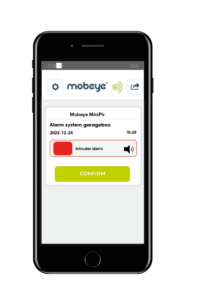
In places where traditional communication networks are unavailable or unreliable, Mobeye’s cellular-based monitoring, alarm, and alert systems provide a dependable lifeline for security and peace of mind. These systems deliver continuous monitoring of power, temperature, water, and flood conditions, operating seamlessly over cellular networks to ensure uninterrupted protection. When sensors detect irregularities or power failures, alerts are sent instantly via the Mobeye App, text message, or email, allowing users to respond quickly and prevent potential damage.
Beyond real-time alerts, Mobeye systems also feature data logging, creating a detailed record of sensor readings for both immediate troubleshooting and long-term analysis. In an increasingly connected world, Mobeye’s cellular-based monitoring technology bridges the gap where other systems fall short — offering reliable, adaptable, and intelligent security solutions, even in the most isolated environments.
Discover our cellular monitoring systems →