

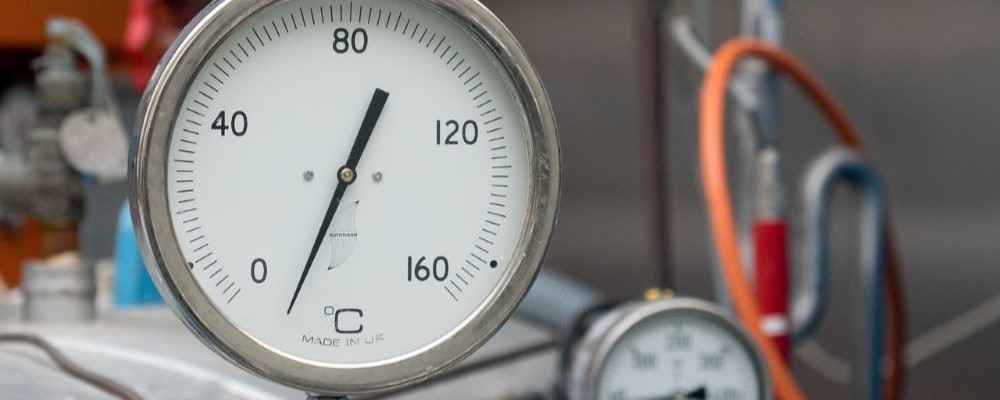
A freezer fails overnight. A boiler stops working in an empty holiday home. A vaccine storage unit drifts above the permitted range on a Sunday afternoon. In each case, the cost of finding out too late, whether through spoiled stock, property damage, or wasted medication, far exceeds the cost of knowing straight away.
Wireless temperature monitoring solves exactly that problem. A sensor placed at the location measures temperature continuously and sends an alert to your phone the moment something goes outside the set limits. No manual checks, no site visits, no unpleasant surprises.
This guide explains how the technology works, where it is most useful, and how to choose the right system for your situation.
What Is Wireless Temperature Monitoring?
Wireless temperature monitoring means tracking temperature conditions in real time from any location, without manual checks. A sensor measures the temperature at a specific location, transmits the data over a wireless network, and delivers it to your phone or computer, together with an instant alert if something goes wrong.
It replaces the practice of checking thermometers by hand or discovering problems after the damage is done. Whether you are managing a cold room in a food warehouse, storing vaccines in a pharmacy, or keeping an eye on a holiday home in winter, the same principle applies: you get the data and the alert when it matters, not when it is too late.
How the Technology Works
A wireless temperature monitoring system has three parts:
- Sensors measure the ambient temperature continuously. They are placed wherever accurate readings are needed;— inside a fridge, in a server room, on a warehouse shelf, or outdoors for frost monitoring.
- Wireless transmission sends the data to a cloud platform via 4G, LTE-M, or Wi-Fi. No cables, no manual reading, and no dependence on a local network. Mobeye devices use the 4G network with 2G as a fallback, which means they keep working even in locations without a fixed internet connection.
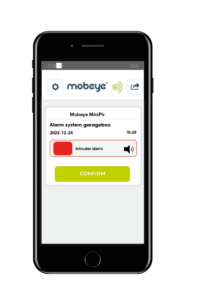
- Alerts and data access reach you via the Mobeye app, SMS, phone call, or e-mail the moment temperature moves outside your set limits. You can also view the full history and live readings through the Mobeye Portal.
Alarm Only, or Alarm Plus Logging?
Mobeye’s temperature monitoring range offers two distinct approaches, depending on what you need:
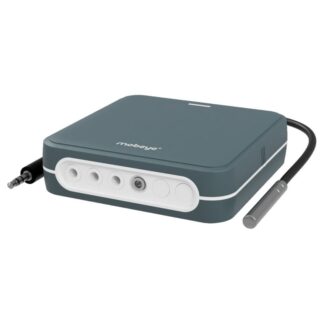
The Mobeye ThermoGuard CM4200 is built purely for alarm functionality. Set your minimum and maximum temperature limits, and it sends a notification the moment either threshold is crossed. It runs on batteries, so it works in locations without mains power.
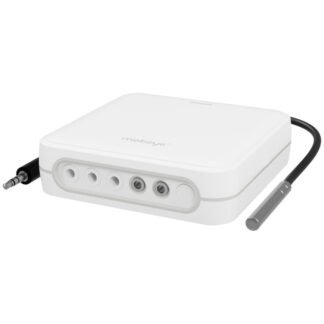
The Mobeye CML4255 and CML4275 combine alarm functionality with data logging. They transmit recorded temperature values to the Mobeye Internet Portal at set intervals, where the data is displayed as graphs, gauges, or tables. This makes them suitable for applications that require both immediate alerts and a documented temperature history, such as pharmaceutical storage or HACCP compliance in food businesses.
Where Wireless Temperature Monitoring Makes a Difference

Cold rooms and freezers
Equipment failures and open doors happen without warning. A wireless temperature alarm system detects the problem within minutes, giving you time to act before stock is lost. For food businesses, the logged data also provides the temperature records required for food safety inspections.
Pharmaceutical and vaccine storage
Medicines and vaccines must stay within narrow temperature ranges. Even a short excursion outside those limits can render an entire batch unusable. Wireless monitoring provides both the real-time alert and the documented history that regulators require.
Server rooms and IT infrastructure
Overheating is one of the most common causes of hardware failure. A temperature alert at 2 a.m. is far less costly than replacing servers the following morning. Mobeye devices can also monitor the air conditioning unit’s fault signal directly, so you know whether it is the cooling system or the room temperature that triggered the alarm.
Homes and holiday properties
A frozen pipe or a failed boiler causes serious damage, particularly in an unoccupied property. A battery-powered wireless sensor requires no installer and no internet connection on site. Pairing it with a Mobeye WaterGuard covers both risks; the temperature alarm warns you before pipes freeze, and the water detector alerts you if a leak has already started.
Horticulture and outdoor use
The Mobeye CML4275 includes a dedicated night frost detection mode, developed in consultation with fruit growers. It uses separate critical and alarm zones to provide an early warning before frost can damage crops. This is a specialised feature for situations where every minute counts.

What to Look for in a Temperature Alarm System
Choosing the right wireless temperature monitoring system depends on two questions: where do you need to monitor temperature, and what do you need to do with the data?
If an immediate alert is all you need, for example for a freezer alarm, frost warning, or server room notification, the Mobeye ThermoGuard CM4200 provides reliable monitoring. It runs on batteries and works wherever a mobile network is available.
If you also need a temperature history for compliance, reporting, or trend analysis, the CML4255 and CML4275 add continuous data logging to the same alarm functionality. Temperature data is stored and displayed in the Mobeye Internet Portal, allowing you to view graphs, download records, and manage multiple devices from one location.
When mains power is connected, the system can also monitor power failures. It sends an alert as soon as the power supply is interrupted, before a temperature problem occurs.
Wireless Temperature Monitoring: Worth Getting Right
Temperature issues rarely give advance warning. A compressor can fail silently. A door can be left open. An unexpected frost can arrive overnight. By the time someone notices, the damage may already be done.
Wireless temperature monitoring removes this risk by providing early warnings. Whether you are protecting stored goods in a cold room, vaccines, a server room, or an empty property, the principle is the same: know about the problem while there is still time to act.
Mobeye devices are battery-powered and connect via 4G, meaning no cabling, fixed internet connection, or complex installation is required. They can be used in warehouses, greenhouses, holiday homes, boats, and other remote locations. Wherever temperature matters, Mobeye provides a reliable monitoring solution.
Browse the full Mobeye temperature monitoring range or get in touch if you need advice on the right solution for your situation.
Recommended Products
-
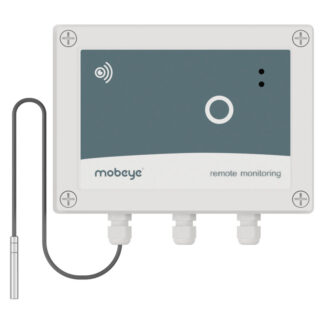
 Mobeye Frost Alert CM4200X€ 310,00 (€ 256,20 excl. VAT)
 -
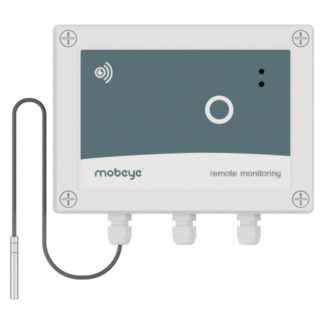 Mobeye ThermoGuard TwinLog CML4275 Temperature Monitor€ 430,00 (€ 355,37 excl. VAT)
 -
 Mobeye ThermoGuard TwinLog CML4255 Temperature Alarm€ 375,00 (€ 309,92 excl. VAT)
 -
 Outdoor Enclosure (Add-on)Mobeye ThermoGuard CM4200 – 4G Temperature DetectorPrice range: € 249,99 through € 275,00