


A gap between tenants is an unavoidable part of letting a property. Whether it lasts two weeks or six months, it represents a window of genuine exposure, one that most landlords underestimate until something goes wrong.
This guide is written for landlords and letting agents managing residential lets between tenancies. It covers the risks that arise once tenants move out, what landlord insurance policies typically expect during that gap, and how to choose the right level of monitoring based on your property type, how long it will sit empty, and how much oversight you can realistically provide.
Why the gap between tenants carries distinct risks
A rental property sitting empty between lets isn’t the same as a holiday home over winter or a commercial unit awaiting a new lease. It has its own risk profile.
Tenants leave at short notice. Utilities may be suspended quickly. The property may sit unsecured during viewings, inspections, or while waiting for a contractor. And because this kind of gap often begins without much warning, monitoring tends to get arranged reactively rather than planned in advance.
The other factor is liability. As a landlord, you remain responsible for the property’s condition during this period. If something happens, such as a break-in, a leak, or a fire, the consequences fall on you, not the outgoing tenant.
What landlord insurance typically requires

Most standard landlord policies include specific conditions once a property has been unoccupied for a stretch of time. These typically activate after 30 to 60 consecutive days, though some apply conditions from day one.
Common requirements include:
- Active security measures, such as working locks, an alarm system, or monitored access
- Regular property inspections, often every seven to fourteen days
- A minimum indoor temperature during winter months, to prevent frost damage
- Notifying the insurer once the property becomes vacant
Falling short of these conditions doesn’t automatically void a policy, but it can significantly complicate a claim. It’s worth checking the specific terms before your next tenancy gap begins rather than after an incident. The NRLA advises landlords to review their policy and inform their insurer as soon as a property becomes vacant, and to keep a record of any security measures in place throughout.
Matching your approach to how long the property will sit empty
Not every gap between tenants carries the same level of risk, and what you put in place should reflect that.
Up to four weeks
A brief handover between reliable long-term tenants in a modern property carries relatively low exposure. Basic intruder detection and a smoke alarm are generally enough to meet insurance conditions and provide a basic alert if something goes wrong.
One to three months
At this length, the risk profile broadens. Weather events, opportunistic access, and slow-developing problems like water ingress become more likely simply because of the time involved. A more considered setup covering intruder, fire, and water or temperature risk is worthwhile.
Three months or more
A longer gap, particularly one involving renovation work, warrants fuller coverage. Contractors coming and going increases access risk, building work can introduce new fire and water hazards, and any undetected problem has longer to develop before someone notices.
Choosing monitoring by property type
Urban flats and terraced houses

The primary risk is usually unauthorised access at ground floor level. Indoor motion detection covers the most likely scenario, and fire monitoring is worth adding given the proximity to neighbouring properties.
Detached and semi-detached houses
A wider perimeter and greater distance from neighbours makes outdoor monitoring relevant alongside indoor detection. Water and temperature risk is also higher, particularly during a winter gap.
Rural properties
Limited passing footfall reduces opportunistic risk slightly, but remoteness means any incident goes unnoticed for longer. Temperature monitoring matters here, and it’s worth checking mobile signal strength at the property before choosing a 4G-connected device.
Properties under renovation
Contractor access introduces variables an occupied or simply empty property doesn’t have. Perimeter monitoring, power failure detection, and fire monitoring are all relevant, particularly where electrical or plumbing work is underway.
The devices landlords use most
Rather than running a full system, most landlords cover the one or two risks that actually apply to their property. Our full range of devices for this, including indoor and outdoor intruder alarms, independent fire detection, water leak sensors, frost monitoring, and power failure alerts, is laid out on our void property security page, with specifications and setup details for each.
In brief, for a typical rental gap:
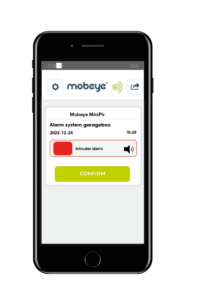
- Indoor break-ins: the Mobeye MiniPir iCM41 covers the most common risk for flats and terraces.
- Gardens, outbuildings, or exposed perimeters: the 4G Outdoor Alarm CMVXI-R extends coverage outside the building itself.
- Fire risk, especially where renovation or electrical work is planned: the Smoke Detector CM4400 works independently of any wired panel; for multi-floor properties, a networked kit covers several rooms from one connection.
- Burst pipes and leaks: the WaterGuard detector catches water at floor level near the pipework most likely to fail.
- Winter frost: the ThermoGuard alerts if temperature drops toward freezing, without a site visit just to check the heating held.
- Active equipment on site during the void, such as a dehumidifier, frost heater, or sump pump: the PowerGuard flags a power cut or tripped breaker before it becomes a secondary problem.
All of them are battery-powered, connect over 4G rather than a landline or broadband, and take minutes to install or remove. This matters when a tenancy gap can start or end with little notice.
What letting agents and property managers should know
If you manage properties on behalf of landlords, this kind of monitoring is worth building into your standard process for every changeover. Alerts can go to multiple contacts at once, so both the landlord and the managing agent get notified without running separate systems.
Because the devices are portable, a single unit can move between properties as one tenancy ends and the next void begins, rather than sitting installed permanently at one address.
Frequently Asked Questions
Most landlord policies include conditions that apply once a property has been empty for a stretch of time, often starting at 30 to 60 days. These typically require active security measures and regular inspections. Check your policy terms as soon as a tenancy ends, and keep a written record of what monitoring is in place. This can matter if you ever need to make a claim.
The two main factors are property type and how long it will sit empty. A short gap in a modern urban flat generally needs basic intruder and fire monitoring. A longer void, a rural property, or one undergoing renovation warrants broader coverage, including water, temperature, and power. See the full range on our void property security page.
Yes, they are designed for self-installation. Most units are operational within fifteen minutes of opening the box. No engineer visit, fixed wiring, or broadband connection is required.
The devices are fully portable. If a new tenant moves in earlier than planned, remove the unit and redeploy it at another property. There is no fixed installation to unwind.
Yes. Multiple contacts can receive alerts from a single device, so the landlord and the managing agent are notified simultaneously without either needing a separate account.
You can nominate a local keyholder, such as a neighbour, contractor, or letting agent, to receive alerts alongside you. For extended absences, alerts can also be routed to a professional Alarm Receiving Centre, which can arrange a physical response on your behalf.
A note on proportionality
Not every tenancy gap needs a full monitoring setup. A two-week handover between reliable long-term tenants in a modern urban flat has a different risk profile from a three-month void in a rural property during winter renovation work.
The most practical approach is to weigh the specific risks for each property and situation individually, and install what is genuinely warranted rather than defaulting to either nothing or everything.