
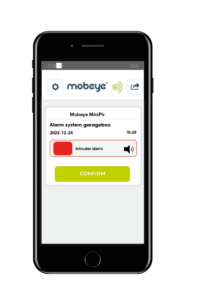


Copper theft follows a pattern. Before anything is stripped from a substation, a rail cabinet, or a construction site, the mains power goes down. Cameras go dark. Alarm panels lose power. For the next few minutes – sometimes longer – the site is blind.
Most security teams only find out once someone arrives and sees the damage. By then there is nothing to investigate except the cost.
Why copper thieves always cut the power first
If you work in infrastructure security or manage remote sites, you will have heard some version of this story. A power outage gets logged. Engineers assume a grid fault and queue a response for the morning. Nobody flags it as a security event because there is nothing to suggest it is one. And then the morning comes.
The frustrating part is that the theft and the power cut are the same event. Most systems treat them separately, or miss the connection entirely. And while the investigation goes nowhere, the bill adds up.
The cost of copper theft goes well beyond the value of the cable itself. Replacement and repair, unplanned downtime, contractor call-out fees, and in some cases regulatory penalties for infrastructure failures; the total impact on a business or public body routinely runs into tens of thousands of pounds. For repeat targets, the figure is higher still.
What to look for in a mains power failure alarm for copper theft prevention
Not every power outage alert system is suited to this application. A few things matter in practice:
- The device needs to work without mains power.
This sounds obvious, but many systems rely on the same supply they are meant to monitor. If cutting the mains silences the alarm, it offers no protection against a deliberate power cut. - It needs to send an alert fast.
A notification that arrives an hour later (or the next morning) is not useful for copper theft prevention. The alert needs to reach someone within seconds of the power going down. - It should not require a complex installation or permanent internet connection.
Remote and unmanned sites often have limited infrastructure. A device that works over GSM and runs on its own battery is far more practical in the field. - It needs to be reliable enough to trust.
False alarms erode confidence and lead teams to ignore notifications. A device with a strong track record in real installations is worth more than one with a longer feature list.
How the CM4100 mains power monitor works
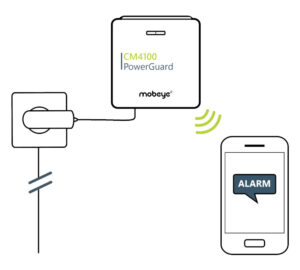
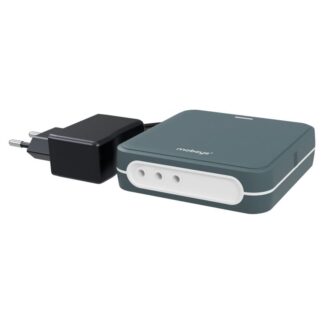
The Mobeye CM4100 is a 4G power failure alarm that monitors mains power continuously. When the supply is cut, it sends an immediate alert by SMS, phone call, or app notification, to whichever contacts you configure. It runs off its own internal battery, so it keeps working even after the mains goes down.
There is no complicated setup. It does not try to do everything. It watches the power supply, and the moment that supply disappears, the right people are notified within seconds.
For copper theft prevention, that timing is what matters. An alert at the moment of the power cut gives a security team a realistic chance of reaching the site while something is still happening. An alert the next morning does not.
Where security professionals use the CM4100
The locations where this is most relevant share a few characteristics: copper present in worthwhile quantity, no permanent on-site staff, and enough distance from populated areas that an unfamiliar vehicle arriving after dark goes unnoticed. Common installations include:
- Electricity substations and distribution infrastructure
- Railway trackside equipment cabinets
- Construction sites with copper wiring and cable runs
- Unmanned industrial and commercial premises
- Agricultural buildings and remote plant installations
Not every power cut at these sites is a theft. But every copper theft starts with a power cut. That is what makes an early mains failure alert worth having.
One thing worth knowing
The CM4100 is not a dedicated copper theft device. It monitors mains power, and that makes it well suited to this application. Security professionals use it for copper theft prevention because it fills a specific gap, not because it was built exclusively for that purpose.
A device that does one thing reliably is often more useful in the field than one that claims to do everything.
Protect your site against copper theft
Looking for a way to protect your site before thieves strike? See CM4100 pricing and specs.
-
 Outdoor Enclosure (Add-on)
Mobeye PowerGuard CM4100 – 4G Power Failure Alarm
Price range: € 215,00 through € 220,00 Choose options This product has multiple variants. The options may be chosen on the product page
The CM4100 is a Mobeye product. Read more at mobeye.com.
Frequently asked questions
Yes. It runs on its own internal battery, so cutting the mains does not silence it. That is the whole point. A device that relies on the same power it monitors offers no protection against a deliberate cut.
Within seconds. The CM4100 sends an SMS, phone call, or app notification the moment it detects the supply has gone down, not after a delay or the next morning.
No. It works over the 4G mobile network, so it is suited to remote or unmanned sites where fixed internet is not available or not practical to install.
No. It is a mains power monitor. It has become a common tool for copper theft prevention because thieves almost always cut power first, but its core function is detecting power failure, not detecting theft directly.
Common locations include electricity substations, railway trackside cabinets, construction sites, unmanned industrial premises, and remote agricultural buildings, anywhere copper is present and there is no permanent on-site staff.
No. The device reports genuine power loss events. Not every outage is a theft, but it gives you the information to check, which is more than most sites have today.